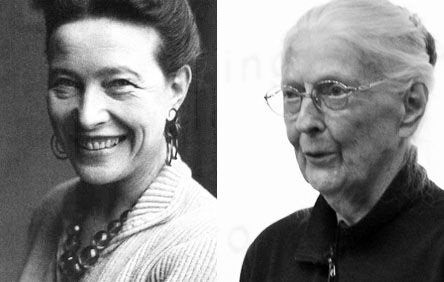
The course "Power, Knowledge, and Materialism: Working with the Foundations of Institutional Ethnography (IE)" (KFL9036) examines the core ideas of institutional ethnography, the research approach developed by sociologist Dorothy E. Smith. This methodology starts from people’s lived experience and everyday life as a basis for studying social power structures.
Critique and Activism
Rather than providing a conventional “how‑to” methodological guide, the course foregrounds IE’s critical perspective, its epistemological roots, and its connections to critical, political, and activist scholarship. Key questions include: What is the relationship between reality and textual reality? What distinguishes critique from activism?
Course leader: Rebecca Lund, Associate Professor and Centre Director at STK.
Unique ethics
The course "Early Beauvoir: Moral Philosophy, Ethics, and Existentialism" aims at PhD students who want a deep understanding of Simone de Beauvoir’s early philosophy and publications, with particular emphasis on her ethics.
As the only existentialist of her time to publish a distinct ethical theory, Beauvoir’s ethics is markedly different from other ethical frameworks such as deontology (duty‑based ethics), utilitarianism (consequence‑based ethics), and virtue ethics.
Course leader: Jennifer McWeeny, Professor II at STK and Professor of Philosophy at Emerson College, USA og Tove Pettersen, Professor at The Center for Gender Research.
Practical information: The courses are held in English.