Centre for Women’s Studies (1986–2001)
The centre was officially established on 4 September 1986 as an inter-faculty initiative intended to promote women’s studies and increase the recruitment of women to research. Since its establishment, the centre has been organised directly under the University Board.
From the outset, it was important to work to ensure that perspectives on women were integrated into research and teaching at the individual departments at the University of Oslo. Research projects with a women’s perspective were also initiated and carried out at the centre. Furthermore, it was an objective to be an arena and meeting place for women’s studies researchers and women researchers both within and outside the University of Oslo, regardless of discipline.
The centre had a trial period of four years and was evaluated in 1991. The University Board, or the Collegium as it was called then, decided to grant the centre a new four-year period. In 1996, the Collegium decided to extend the centre’s operation, this time without a time limit.
After the extension in 1996, the centre was allocated PhD fellowship positions and received formal approval to offer teaching in 1998. The first courses were offered in 1999 at the hovedfag (master’s-level) stage. In addition, an introductory course in interdisciplinary women’s and gender research was started, in collaboration with other departments at UiO. This also marked the beginning of a long-term collaboration with the Faculty of Humanities, which assumed overall academic responsibility so that study places could be approved.
Bulletine was established as an information bulletin/newsletter around the one-year anniversary of the new centre. In order to create identity and legitimacy for an emerging field of research, it was considered important to have a dedicated information bulletin/magazine. The centre also wanted to highlight the academic activities within the unit and to have control over the distribution of practical information, for example about seminars.
Bulletine became a combination of an academic magazine and a news bulletin, focusing on teaching with a women’s perspective at other units at the University of Oslo, as well as issues related to research and university policy seen “through women’s eyes”. Bulletine was published twice a year between 1987 and 2016. Bulletine is presented in a separate feature together with available digital editions from 2006 to 2016 (Norwegian only). The first issue has been scanned and specially added.
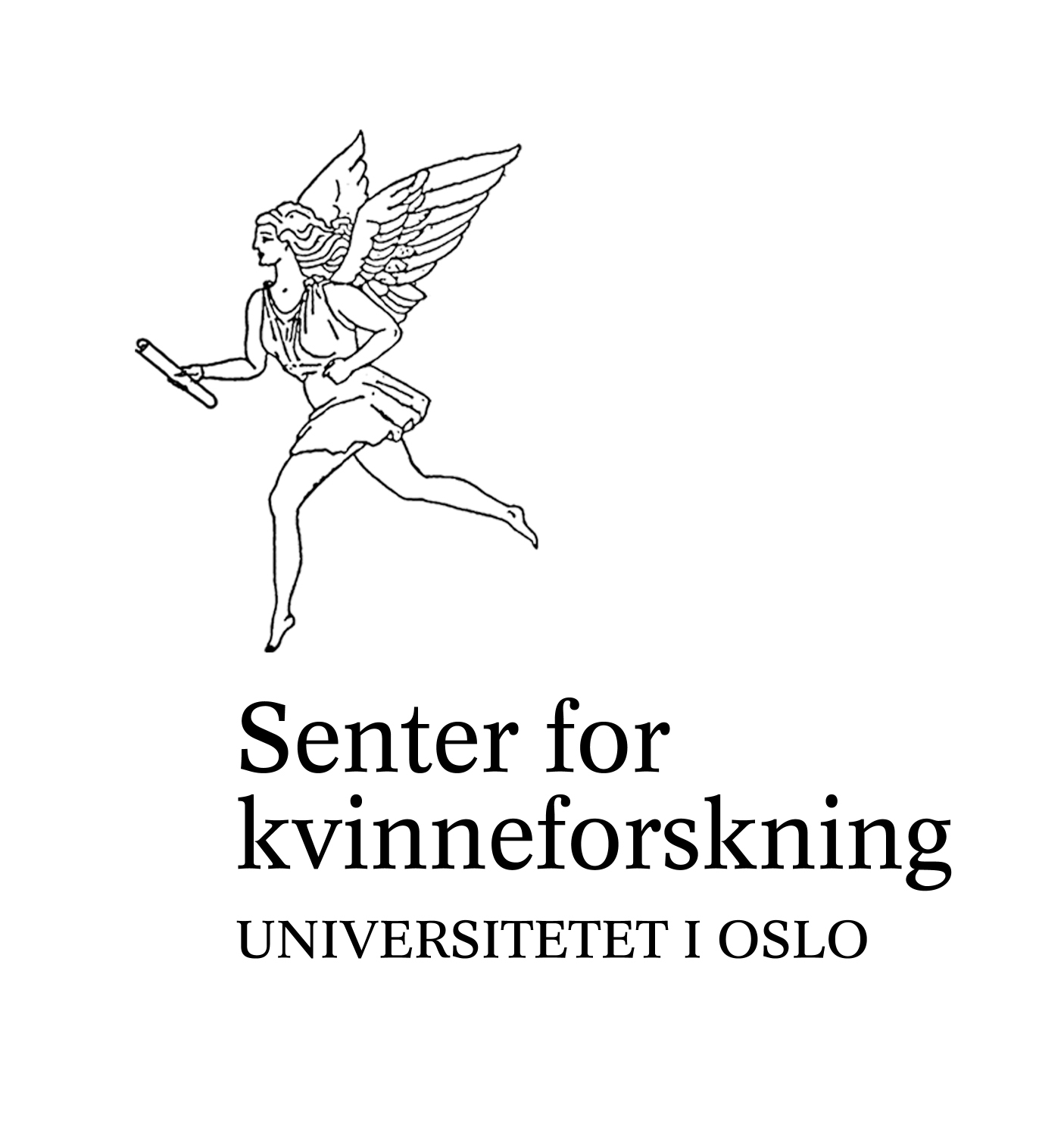
When the centre was established, UiO did not require everyone to use Apollon as a logo, and it was proposed that the new centre should use the figure Iris as its emblem. Iris is a mythological figure. She is the messenger between heaven and earth and was in many ways an obvious symbol, constantly moving between different spheres. The illustrator Finn Graff was commissioned to visualise the goddess. Equipped with wings and a short tunic and holding the herald’s staff as a sign of the important message she carries. She was launched together with Bulletine and was the centre’s logo until 2010.
In 1992, the centre introduced an award for the best hovedfag/master’s thesis, an award that continues to this day. Initially, it was a prize for an outstanding contribution to women’s studies, among other things to inspire students working in women’s studies to strive for quality and originality. The prize was established on the initiative of the Fund for Women’s Studies, a fund that administered certain author’s royalties. Eventually the funds were depleted, but the prize has continued, financed now by the centre’s own funds.
In connection with the name changes, the annual prize was also renamed. First it became the prize for outstanding women’s and gender research at UiO, then the prize for outstanding contribution to gender research in 2006, and finally the prize for the best master’s thesis with a gender perspective submitted at the University of Oslo.
Directors of the centre in this period:
- In 1986, Fride Eeg-Henriksen was the acting director (administrative director before an academic director was appointed)
- In 1987, Elisabeth Gulbrandsen was academic coordinator
- From 1988 to 1990, Karin Widerberg was research director
- In 1991, Toril Steinfeld was employed as academic director
- In 1992, Drude von der Fehr and Brit Berggreen were academic directors
- From 1993 to 2000, Professor Harriet Bjerrum Nielsen was employed as academic director (director of the centre)
- In 2000, Professor Beatrice Halsaa was employed as director of the centre
Centre for Women’s and Gender Research (SKK) (2001–2007)
During the first period, the field was continually evolving, and over time there was a consensus that “women’s studies” was no longer an adequate designation for the centre alone. A naming debate was launched and conducted openly, with the possibility for everyone to contribute, including those who did not work at the centre on a daily basis. This resulted in a broadly engaged discussion.
The goal was to find a descriptive name that would signal both tradition and renewal, as well as academic rigour and social relevance. There was also a need to make room for more, for example research on men. In 2001, the centre’s board decided to change the name to Centre for Women’s and Gender Research.
In 2007, it was considered whether the centre should be relocated to one particular faculty or continue to be directly under the University Board. The evaluation report concluded that the centre should retain its current placement in the university structure, which was also adopted by the University Board in 2008.
The bachelor’s programme Gender, Feminism and Equality was launched in 2003. The abbreviation KFL has been used as a course code at the centre since then. The structure continued the collaboration with other departments and faculties, meaning that students had few compulsory courses at the centre and many options elsewhere at the university to earn the credits needed for their bachelor’s degree. This meant that the centre had to engage in active collaboration with the rest of the university, and this programme became a lever for maintaining women’s and gender research at the departments. The establishment of the bachelor’s programme was also an important step towards a more stable and predictable financial situation for the centre.
From 2005, a one-year unit in Interdisciplinary Gender Studies was introduced. This was initially intended as an offer to students who wanted gender-related academic input relevant to their professional practice.
Directors of the centre in this period:
- From 2001 to 2002, researcher Elisabet Rogg was employed as director of the centre
- From 2003 to 2004, Professor Beatrice Halsaa was employed as director of the centre
- From 2005 to 2009, Professor Harriet Bjerrum Nielsen was employed as director of the centre
Centre for Gender Research (STK) (2008–)
In 2007, the centre invited to a new naming debate online, but this time without response. At the board meeting on 23 May 2007, the board decided that the centre would change its name to Centre for Gender Research (STK) as of 01.01.2008.
The justification for the name change was that research should be conducted on women’s situation, on gendered meanings and on inequality and power relations, power between the genders, but also on men’s situation, on sexuality, on ethnicity and on changing gendered power structures.

Iris disappeared as the centre’s logo when UiO adopted a uniform visual identity and design manual. Locally designed logos were no longer to be used.
In 2007, the bachelor’s programme and the one-year unit changed their name to Gender Studies. One of the reasons was the almost total absence of male students and a wish to signal a more inclusive and broad profile. At the same time, the centre entered into a collaboration with the International Summer School at UiO and offered the course Gender Equality in the Nordic Countries.
In autumn 2011, the centre launched its English-language master’s programme, Gender Studies. This was developed following sustained demand from bachelor students who wanted to continue to a higher degree within the same field.
The centre has marked International Women’s Day on 8 March throughout its entire existence. Since the early 2000s, the centre has created and organised the official 8 March event for UiO in collaboration with the university leadership and the Equality Committee.
Directors of the centre in this period:
- Professor Jorunn Økland was elected director of the centre from 2010 to 2014.
- Professor Beatrice Halsaa was elected director of the centre from 2014 to 2015.
- Professor Anne-Jorunn Berg was employed as director of the centre from 2015 to 2018.
- Professor Helene Aarseth was elected director of the centre from 2019 to 2020.
- Professor Inger Skjelsbæk was elected director of the centre from 2021 to 2024.
- Associate Professor Rebecca Lund is elected director of the centre from 2025.
40th anniversary in 2026
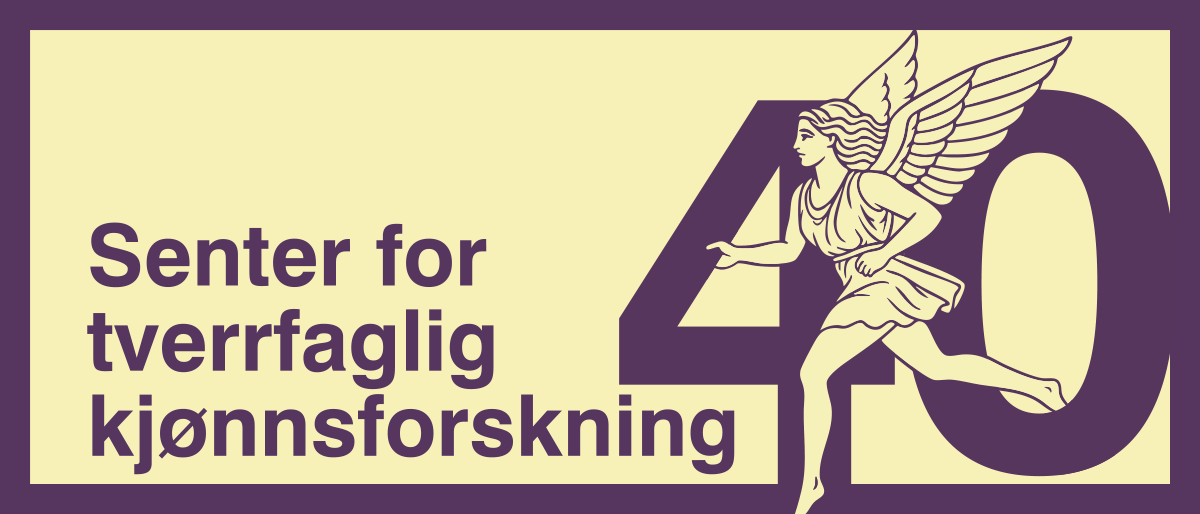
In 2026 it will be 40 years since the centre was established. In this connection, a dedicated logo was created to help highlight the anniversary and promote the centre. It was natural to look back to the roots and reintroduce Iris. It is a modified version of Iris with cleaner lines that is better suited to today’s digital platforms, but it remains faithful to Finn Graff’s original drawing.
The centre’s board
The centre has had a board throughout its existence. The board is appointed by the University Board and consists of 11 representatives with personal deputies. All faculties at UiO are represented, either as a member or as a personal deputy member. STK’s board also includes external representatives, as well as representatives of staff and students.
Chairs of the board:
- 1986 to 1992 – Karin Gundersen
- 1993 to 2000 – Hanne Haavind
- 2001 to 2007 – Kjersti Ericsson
- 2008 to 2011 – Anne Birgitte Rønning
- 2012 to 2015 – Halvard Vike
- 2016 to 2019 – Kari Nyheim Solbrække
- 2020 to 2023 – May-Len Skilbrei
- 2024 – Eirinn Larsen