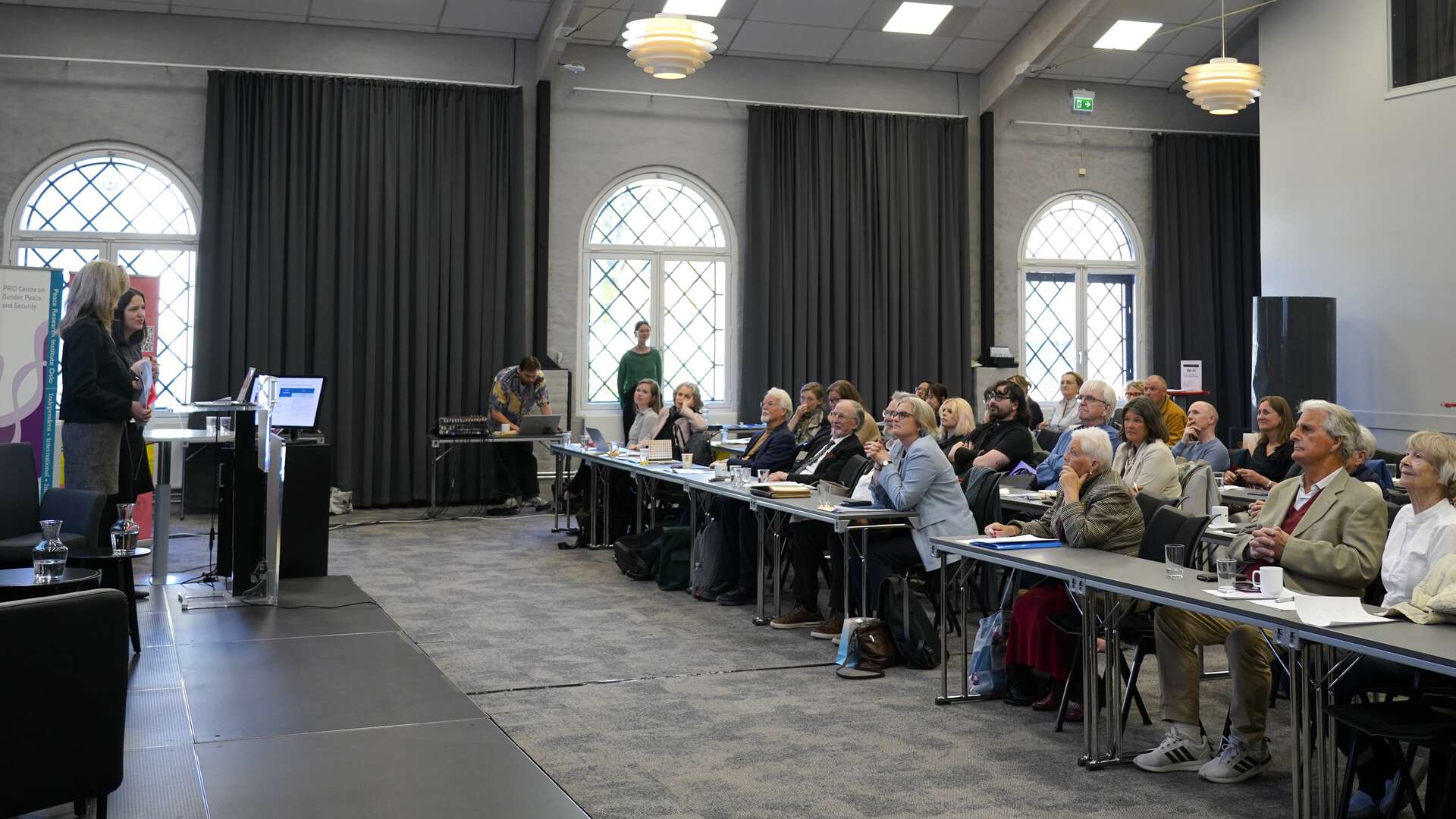
The concluding conference of the European Research Council (ERC) Consolidator Grant project EuroWARCHILD, led by Inger Skjelsbæk, Professor at the Center for Gender Research (STK) University of Oslo, was held at the Peace Research Institute Oslo (PRIO) on 7 May.
The conference brought together researchers, policymakers, and children born of war (CBOW) from different generations, countries and contexts. The event showcased the intellectual and political significance of a project that has combined gender theory, political, legal, and psychological inquiry with advocacy for a long-neglected population.
Learning and policy making
As Inger Skjelsbæk emphasized, EuroWARCHILD has made it possible “to interact and learn from populations who have, historically, been overlooked and forgotten,” while engaging continuously with policy and practice communities throughout the project’s lifetime.
The project examines three generations of CBOW in Europe: children fathered by enemy soldiers in World War II, children conceived through war-related sexual violence in the Balkans in the 1990s, and children born to European foreign fighters affiliated with ISIS. The project set out to understand the needs and rights of these children and to theorize “securitized child identities” by documenting how security discourses shape mobilization and how CBOW narrate their life histories.
"Reevaluate the hierarchies of sex and war"
The conference opened with a keynote by Fionnuala Ní Aoláin, Professor at the University of Minnesota Law School and Queen’s University Belfast and former UN Special Rapporteur on counterterrorism and human rights (2017–2023). She questioned whether the Women, Peace and Security (WPS) agenda within the EU Common Foreign and Security Policy is sufficient to meet women’s needs.
She argued that the prevailing focus on conflict-related sexual violence risks obscuring other forms of harm, and that both the Geneva Conventions and related regimes reflect deeply gendered and patriarchal conceptions of violence and victimhood. Central to her intervention was a call to “reevaluate the hierarchies of sex and war.”
Women, especially as mothers, experience harm in ways that existing legal frameworks fail to capture. States, she argued, must stop treating violence against women as collateral damage and instead adopt a paradigm of “holistic harm” that recognizes women as mothers, women, and civilians subjected to multiple, interlocking violences.
Official appologies and support
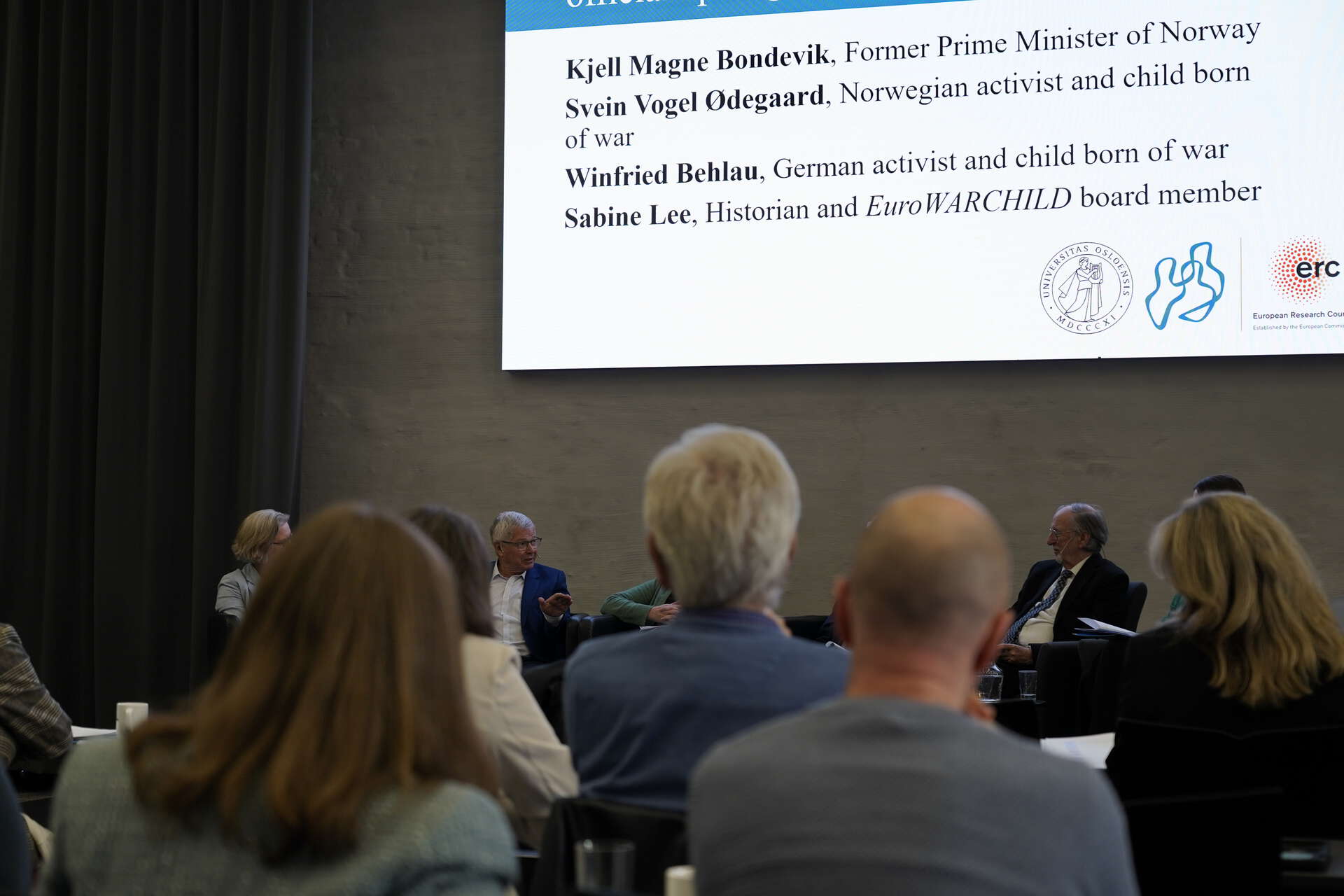
Then followed a panel focusing on the significance of official apologies which included former Prime Minister of Norway, Kjell Magne Bondevik who issued an official apology to Norwegian children born of war in 2001.
This was followed by another panel examining the intergenerational support and learning from different generations and different contexts with a special focus on how children born of WW II had engaged with the children born of the European wars of the 1990s. In the final panel, legal frameworks addressing CBOW focusing on international normative, legal and policy frameworks in addition to local experiences in Bosnia and Herzegovina.
Throughout the day the members of the EuroWARCHILD team presented their preliminary findings, and lessons learned.
Aims to improve the lifes of CBOW
The project’s insistence on centering CBOW’s own narratives, and on situating their rights within broader debates on gender, security, and international law, offers a foundation for future research and advocacy, Inger Skjelsbæk emphasized.
As she also observed, sharing findings has been a powerful motivation throughout the project, with the hope that this work will improve the lives not only of CBOW today, but also of children born of wars yet to come.
The Project Group
The core project group includes Inger Skjelsbæk (PI), Ingvill C. Ødeagaard, Torunn L. Tryggestad, Johanne Rokke Elvebakken, Lina Stotz, Andrea Cocciarelli, and affiliate Lisa Govasli Nilsen.

Further reading:
For an overview of the project see: EuroWARCHILD
For an overview of the final conference on 7 May at PRIO see: EuroWARCHILD conference on children born of war – Peace Research Institute Oslo (PRIO)